
Imagine adding $100,000 to your retirement—without saving another penny. What if I told you the secret is simply when to claim Social Security? Picking the best age to claim Social Security can boost your monthly check and maximize your Social Security payout.
In this easy guide, I’ll share a simple Social Security claiming strategy and show you how to delay Social Security benefits the smart way. You’ll see exactly how timing your claim can give you more money for the retirement you deserve.
The Big Myth About Claiming Social Security at 62
You’ve probably heard this before: “As soon as I turn 62, I’m taking my Social Security. I’ve worked hard for it—I want my money now.”
And honestly? I get it. You’ve been paying into this system your whole working life. It feels only fair to start seeing the payoff. Plus, with all the news swirling around Social Security’s future, there’s a real fear that if you don’t claim early, you might miss out altogether.
But here’s the truth—and it’s a hard pill to swallow for some: claiming too early could actually cost you tens—or even hundreds—of thousands of dollars over your retirement.
Why Claiming Early Might Cost You More Than You Think
Here’s what happens when you claim at 62: your monthly benefit is permanently reduced.
That’s not temporary. It’s locked in. Forever.
And while the fear about Social Security “running out of money” makes headlines, the reality isn’t as dire. According to experts, even if the trust fund dips, Social Security will continue paying out benefits—just at slightly adjusted rates. So the program isn’t disappearing, and waiting to claim is still a smart move for many.
How Delaying Boosts Your Monthly Benefits (and Peace of Mind)
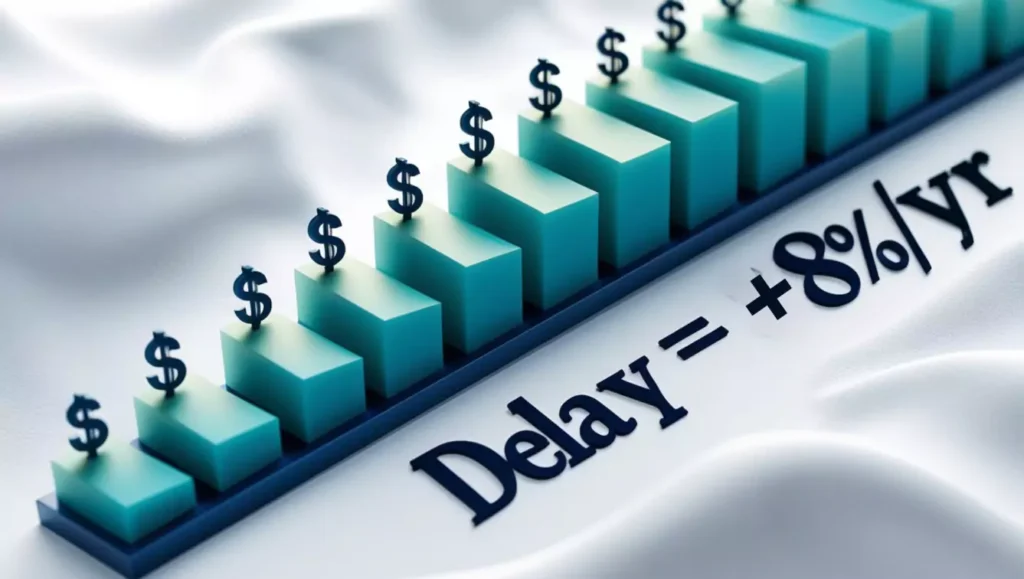
Here’s the magic in waiting: for every year you delay taking Social Security past your full retirement age (typically between 66 and 67), your benefit increases by about 8% annually.
Let that sink in. An 8% guaranteed growth every year you wait? That’s incredibly powerful—especially when you think long term.
Let’s Look at the Numbers
Imagine your full retirement age benefit is $2,000/month at age 66.
- Claim at 62: You’d only get about $1,400/month—that’s a 30% cut.
- Claim at 70: Your benefit jumps to about $2,640/month—a 32% increase.
That’s $1,240 more every single month compared to claiming early.
Now let’s stretch that over 20 years:
- Claiming at 62: $1,400 × 12 months × 20 years = $336,000
- Claiming at 70: $2,640 × 12 months × 20 years = $633,600
That’s a whopping $297,600 difference—and that’s before you factor in cost-of-living increases.
Even waiting until 66 instead of 62 nets you an extra $144,000 over 20 years.
But… What If Social Security “Goes Broke”?
I hear this question all the time. And it’s fair—nobody wants to gamble with their future.
But here’s what you need to know: even if the trust fund gets depleted, Social Security still brings in revenue through payroll taxes. According to Emerson Sprick from the Bipartisan Policy Center, “The biggest myth about Social Security is that when the trust fund runs out, the program is just going away.”
It’s not. Benefits may be reduced slightly, but the system will still function. So don’t let fear steer you into claiming early when waiting might be the smarter play.
How Your Benefit Is Calculated (And Why Timing Matters)
Social Security calculates your benefit based on your highest 35 years of earnings, adjusted for inflation. According to the SSA, If you didn’t work for 35 years? Those missing years count as zeros—which can lower your benefit.
And here’s another wrinkle: when you claim early while still working, your benefit might be temporarily reduced if your income exceeds certain thresholds. This is due to what’s called the earnings test.
Waiting not only avoids those reductions but also ensures your cost-of-living increases apply to a higher base amount—compounding the long-term benefit.
Longevity Is the Real Game-Changer
Let’s get real for a second.
People are living longer. If you’re in good health, there’s a solid chance you could live 20–30 years after retirement. And when you stretch those higher benefits over that timeline? The gains become life-changing.

For many retirees, Social Security is the primary income source. That makes every extra dollar matter. And if you expect to live into your 80s or 90s? Delaying can make a world of difference.
When to Claim Social Security Early Does Make Sense
That said, claiming early isn’t always wrong.
- If you have serious health issues or a shortened life expectancy, taking benefits sooner may be the best option.
- If you absolutely need the income to cover basic living expenses, then it’s better to have a smaller benefit than none at all.
- Or if you’ve got strong other income sources—like a pension or investments—you may have the flexibility to claim early without regret.
The Psychological Side: Why We Claim Too Soon
Let’s be honest—some of this comes down to mindset.
There’s a powerful sense of ownership around Social Security. It’s your money, right? So why not take it while you can?
Researchers Suzanne Shu and John Payne found that many people feel like they’re “losing out” by waiting. But some retirees later regret waiting too long. I’m Retired and Regret Claiming Social Security at 70 — Here’s What I Learned is a powerful firsthand story that shows how personal situations can change what’s “best.”
But here’s the thing: the break-even point is usually in your late 70s to early 80s. And given that the average life expectancy is climbing—especially for women—that math often favors waiting.
Here’s What It All Boils Down To
If you’re thinking about claiming Social Security at 62, I totally understand the temptation. But I urge you—run the numbers, take an honest look at your health and income needs, and think long-term.
Delaying even by a couple of years could mean thousands more in your pocket—month after month, year after year.
Patience truly pays off.
FAQs
Is it better to take Social Security at 62 or wait?
It depends on your health, finances, and longevity. Generally, waiting boosts your monthly benefit significantly, making it better for long-term income.
How much more is Social Security at 70 than at 62?
You can receive up to 76% more by waiting until 70 instead of claiming at 62. The increase depends on your full retirement age and income history.
What’s the best age to claim Social Security?
For most people, the best age is between 66 and 70, depending on health, income needs, and longevity expectations.
Will Social Security run out?
No. While trust funds may be depleted by the 2030s, Social Security will still pay benefits through payroll taxes—though possibly at reduced levels.
Can I work and collect Social Security at the same time?
Yes, but if you’re under full retirement age, your benefits may be temporarily reduced if your income exceeds certain limits.
Final Thoughts
If you’ve made it this far—thank you. This stuff matters. It’s your future, your security, your peace of mind.
I know retirement planning can be stressful, but just know: you’re not powerless. With the right information, you can make decisions that support your best life.
So, before you file that Social Security claim, take a breath. Ask yourself, “Can I wait a little longer for a much bigger return?”
Because sometimes, the smartest money move is simply waiting.
Disclaimer: This content is for informational purposes only and does not constitute financial or tax advice. Always consult a licensed tax professional for advice specific to your situation.