Kohls Store Closures 2026: Complete List & Analysis
✅ In this article, you’ll learn:
- How many Kohl’s stores are actually closing in 2026
- Which specific locations are affected
- Why Kohl’s is making these changes
- What the retailer’s financial health looks like now
- How this compares to other department store closures across America
Introduction
If you’ve driven past your local Kohl’s lately and noticed a “Store Closing” sign, you’re not alone. Americans across the country have been spotting liquidation banners at their neighborhood Kohl’s—and it’s raising questions.
Here’s the thing about retail in 2026: it’s changing fast. And Kohl’s, the Wisconsin-based department store chain that’s been a shopping staple for over 60 years, is right in the middle of this transformation.
Let’s break down simply what’s really happening with Kohl’s stores, which locations are closing, and whether your local store is at risk.
The Short Answer: Yes, But Fewer Than You Think
Kohl’s is closing stores in 2026—but the number is much smaller than recent headlines might suggest.
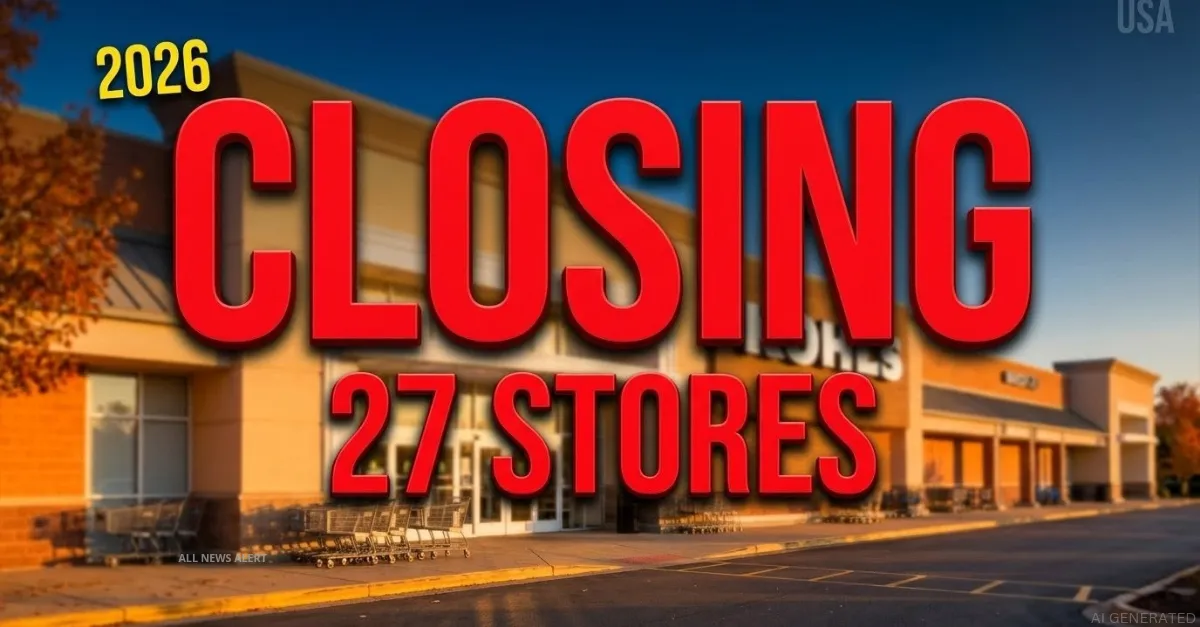
27 stores are closing across 15 states. That’s it.
When you consider Kohl’s operates 1,150 locations nationwide, these closures represent only about 2.3% of their total footprint. According to Kohl’s CEO Michael Bender, “well over 90% are profitable.”
The company announced these closures back in early 2025, and most have already shut their doors or will complete the process by April 2026.
You May Also Like:
- 1 UBS in 2026: What Americans Need to Know About This Global Banking Giant →
Which Kohl’s Stores Are Closing?
If you’re living in one of these communities, your local Kohl’s is affected. Here’s the complete list by state:
California (10 stores)
- Balboa (San Diego)
- Encinitas
- Fremont
- Mountain View
- Napa
- Pleasanton
- Point West (Sacramento)
- San Rafael
- San Luis Obispo
- Westchester
The company is also closing its San Bernardino E-Commerce Distribution Center in California by May 2026.
Why Is Kohl’s Closing These Stores?
Most Americans don’t realize that closing stores isn’t always a sign of failure. Sometimes, it’s smart business.
The Profitability Factor
Kohl’s has been straightforward about why these particular locations are closing: they’re underperforming. When a store isn’t profitable, it drains resources that could be used elsewhere. Think of it this way: would you keep pouring money into a leaky bucket?
The Changing Customer
According to Kohl’s CFO Jill Timm, their core customers—low- to middle-income Americans—are being “choiceful” with their spending. With inflation still fresh in everyone’s minds, shoppers are thinking twice before opening their wallets.
CEO Michael Bender put it plainly: “Our core low- to middle-income customers continue to face financial pressure and they are seeking value.”
Competition from All Sides
Kohl’s is getting squeezed from multiple directions. On one side, there’s Amazon and online shopping. On the other, off-price competitors like Ross Stores and TJ Maxx are pulling in bargain-hunters. Even the brands Kohl’s sells are now selling directly to customers online.
The Bigger Picture: Department Stores Across America
Kohl’s isn’t alone in this struggle. Across the US, department stores are rethinking their real estate.
Macy’s is closing 66 locations as part of a plan to shutter 150 underperforming stores by the end of 2026. JCPenney has been shrinking its footprint for years. And Saks is closing multiple locations as it navigates bankruptcy.
Data from the Federal Reserve and retail analysts shows that while overall retail sales have grown nearly 42% since 2019, Kohl’s sales are roughly 26% lower than they were five years ago. That’s a staggering gap.
What’s Next for Kohl’s?
Here’s where the story takes an interesting turn.
Despite the closures, Kohl’s is actually in better shape than it was a year ago. In early 2025, things looked rough. But by March 2026, the company reported improved performance and stronger earnings.
Financial Snapshot
| Metric | Q4 2025 | vs. expectations |
|---|---|---|
| Earnings per share | $1.07 | beat 85¢ estimate |
| Revenue | $5.17 billion | above projections |
The company expects fiscal 2026 sales between $15.2 billion and $15.5 billion, with earnings per share of $1.00 to $1.60.
New Strategies
- Goods for Good Collection: New merchandise under $10, continuing a program that’s raised over $440 million for families and kids over 25 years.
- In-Store Experience: More merchandise near checkout lines for impulse buyers, and greater emphasis on mannequins to help shoppers visualize outfits.
- Fresh Products: New arrivals across women’s, men’s, kids’, shoes, jewelry, accessories, toys, and home goods.
US-Specific Considerations
State-by-State Impact
The 27 closures are spread across 15 states, with California hit hardest (10 stores). If you’re in the Midwest or Northeast, you might notice fewer closures—Kohl’s is maintaining its stronghold in regions where it has deeper roots.
What This Means for Shoppers
If your local Kohl’s is closing:
- You’ll find massive clearance sales before the doors shut
- Kohl’s Rewards members can still use points at other locations
- Online shopping remains fully operational
- Returns for online purchases can be made at any open store
The Employee Situation
Kohl’s hasn’t disclosed exactly how many workers are affected, but the company says employees were informed ahead of time and offered “competitive severance packages” or the chance to apply for other positions within the company.
What Industry Experts Are Saying
Retail analysts point to a fundamental truth: the old department store model needs an update.
“Shoppers are reallocating spend to category specialists,” notes one retail analyst. Instead of buying jewelry at Kohl’s, consumers might go to Zales. Instead of apparel, they might hit Gap or Abercrombie & Fitch.
The bottom line is that department stores must give people a reason to visit. Personal styling, localized merchandise, and better service can make a difference. According to one survey, 54% of shoppers who have a negative department store experience reduce their spending—and 11% stop shopping there entirely.
Conclusion
So, are Kohl’s stores closing? Yes—27 of them. But here’s what you need to know: the company isn’t collapsing. It’s right-sizing.
Kohl’s is closing underperforming locations while investing in the 1,123 stores that remain open. The strategy is simple: focus resources where they’ll generate the best return.
If you’re a Kohl’s shopper, your favorite store is almost certainly safe. And if it’s one of the few closing, take advantage of the clearance sales—then get ready to shop online or at another location.
The retail landscape is changing across America. But with improved financial performance and a clear strategy for 2026, Kohl’s appears positioned to navigate these shifts.
🇺🇸 Across America — we keep you informed.
💬 What’s your experience?
Have you shopped at a closing Kohl’s store? How do you feel about the changes happening in American retail? Drop a comment below and join the conversation!